The California Supreme Court’s Dynamex Decision Impacts Standards

The California Supreme Court’s Dynamex Decision Impacts Standards.jpg

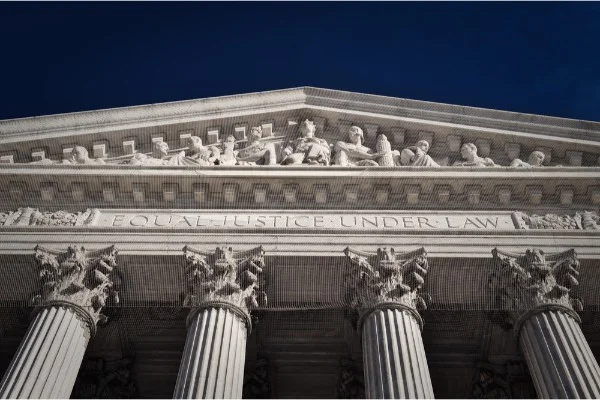
The California Supreme Court’s decision on Dynamex Operations West, Inc. v. Superior Court of Los Angeles is affecting legal standards determining whether a worker should be legally classified as an employee or an independent contractor. The company in the case, Dynamex, put a test in place as a standard determining classification that made it more difficult for businesses to classify workers as independent contractors.

For example, Lawson v. Grubhub, Inc. was a case heard before U.S. Magistrate Judge Jacqueline Scott Corley. It was a closely watched case out of California federal court. The judge on the case noted in a new order that her decision on the case may have been different if the Dynamex opinion had already been recorded. While Judge Corley declined to vacate her earlier finding, it is likely the order will be reversed upon appeal.

In Lawson v. Grubhub, Inc. the plaintiff, Raef Lawson was a GrubHub driver who claimed he was misclassified as an independent contractor. When GrubHub moved to dismiss the suit in early 2018, the district court found the company did not “control” Lawson’s work – siding with the company. Lawson appealed. After the Dynamex decision, Lawson filed a motion. He sought relief from the judgment on record. Lawson argued that his case would have had a different outcome if the California Supreme Court had adopted a new legal standard for use when determining the classification of workers as employee or independent contractor. The court responded by allowing that a careful consideration of the issues and with the benefit of an oral argument, the motion raises substantial issue, but they declined to definitively rule on vacating the judgment. They court noted that deciding whether or not the Dynamex ruling should apply retroactively is a decision to be made by the U.S. Court of Appeals for the Ninth Circuit.

If you have questions about misclassification or if you need to discuss how you can seek justice when your employer refuses to provide you with overtime pay, please get in touch with one of the experienced employment law attorneys at Blumenthal Nordrehaug Bhowmik De Blouw LLP.



 

California’s Motion to Dismiss in Dynamex-Related Case

California’s Motion to Dismiss in Dynamex-Related Case.jpg

A California Supreme Court ruling that could upend years of law regarding the frequently litigated independent contractor vs. employee issue is fighting push back from trucking groups. A large part of the transportation industry workforce is made up of independent contractors. These independent contractors generating a significant portion of the transportation industry’s life force include thousands of California truck drivers/owner-operators.

The ruling under scrutiny was in the Dynamex class action lawsuit and came down on April 30th. The ruling adopted the ABC test.

Defining the ABC Test: The ABC Test assumes most workers are employees and are eligible for the protections offered by California wage laws (including overtime pay regulations, meal break requirements, and minimum wage guarantees). Part B of the ABC Test is vital. It states that a worker has to perform work outside the usual course of business of the hiring company in order to qualify as an independent contractor. This part of the ABC Test would rule out owner-operator truck drivers. They are most often doing the same type of work as their “client” companies.

The court’s decision in the Dynamex case throws the legality of the entire California trucking industry into question. In fact, the Western States Trucking Association filed a lawsuit earlier in 2018 against the state of California over the potential enforcement of the ruling. They argued that the Dynamex ruling is in violation of federal laws on interstate transportation preempting states from passing laws that affect prices, routes and services of interstate motor carriers.

Western States Trucking Association is not the only group pushing back against the ruling on the Dynamex case. The California Trucking Association filed its own lawsuit in October 2018 to try to prevent the state from applying and enforcing the ABC test categorically.

If you have questions about how to address wage disputes, wrongful termination claims, overtime violations or questions of misclassification, please get in touch with one of the experienced California employment law attorneys at Blumenthal Nordrehaug Bhowmik De Blouw LLP.

Did You Sign an Arbitration Agreement?

Did You Sign an Arbitration Agreement.jpg

Did you know that millions of US workers are currently “barred” from the court system? Did you know that you may be one of them and not even realize it? Approximately 60 million American workers have signed arbitration agreements or arbitration clauses and they may not have even realized they were doing so.

Close to 50% of all non-unionized workers employed at companies in the United States are subject to arbitration agreements (according to the Economic Policy Institute). This number has more than doubled since the early 2000s. Major employers across the nation have adopted them as standard, including: Uber, Google, McDonald’s, Starbucks, Walmart, Macy’s, and more.

The increase in the use of mandatory arbitration agreements is making it increasingly difficult/impossible for employees to seek justice when they are victims of wage theft, discrimination in the workplace, retaliation, harassment, overtime violations, etc. The recent Supreme Court ruling allowing employers to prohibit class-action claims from workers in arbitration only increased the incentive for companies to include arbitration clauses right in their employment contracts for new hires.

The practice was once limited to business to business contract disputes, but it is now extending to legal disputes with employees and consumers. This change occurred after a significant Supreme Court ruling in 2001 related to sexual harassment. In Circuit City Stores Inc. v. Adams, an associate working at a Circuit City store in California sued the company for sexual harassment. The associate’s name was Saint Clair Adams. He said he was harassed by his co-workers because he was gay. He, like all the other employees of Circuit City, had signed an arbitration agreement stating that all disputes with the company must be resolved through private arbitration. The company argued their case in federal court, insisting that Adams was required to move his claim to arbitration due to the agreement.

The judge on the case sided with the plaintiff, Adams, and cited the Federal Arbitration Act. The Federal Arbitration Act allows companies to resolve contract disputes through arbitration but includes a provision that excludes employment contracts. The judge’s ruling was later upheld by the Ninth Circuit Court of Appeals.

The argument didn’t die with the appellate court though. Circuit City took the case to the Supreme Court where the lower court’s ruling was overturned – extending the reach of arbitration clauses to nearly all employment contracts. The justices based their decision on a close reading of the employment exclusion in the Federal Arbitration Act, which reads, “but nothing herein contained shall apply to contracts of employment of seamen, railroad employees, or any other class of workers engaged in interstate or foreign commerce.” The justices interpreted this to mean that “transportation workers” were exempt from mandatory agreements; and that non-transportation workers would be required to take their claims to arbitration.

Another Supreme Court ruling in May 2018 made it even more difficult for workers to seek justice or force a company to change working conditions. The case was Epic Systems Corp. v. Lewis and the court decided that it is legal for employers in the United States to prohibit employees from joining together to file suit against the company claiming discrimination, wage theft, or other common workplace violations.

Do you have questions about how to deal with workplace violations when there is an arbitration agreement in place? Call one of the experienced California employment law attorneys at Blumenthal Nordrehaug Bhowmik De Blouw LLP.

Some Companies Are Responding to Worker Demands to Limit Arbitration

Some Companies Are Responding to Worker Demands to Limit Arbitration.jpg

In response to the social and political climate, some companies are already starting to limit arbitration on their own. Mounting pressure from employees as well as the general public after the #MeToo movement had several Silicon Valley tech giants altering their policy and no longer requiring workers to take their sexual harassment cases to arbitration. The first to make the change were Uber and Microsoft. Google and Facebook announced plans to follow suit not long after.

While the change is heading in the right direction, some employees are still unhappy with the state of affairs. They say the exclusion for sexual harassment claims is nowhere near enough. For example, Google experience major backlash after a recent article in the New York Times offered details about how the tech giant paid out millions in exit packages for male executives who were accused of sexual harassment, while staying silent about the actual harassment.

Anger over this situation only added to the already mounting frustration at Google over ethical and transparency issues. The tension built up to a walkout on November 1st. Over 20,000 Google employees and contractors walked off the job in protest of Google’s method of dealing with sexual harassment claims. Employees demanded that Google executives end forced arbitration for discrimination claims (including sexual harassment, racial discrimination and gender discrimination), amid other demands. The company agreed to some of the employee’s demands a week later, but only agreed to drop mandatory arbitration for claims of sexual harassment and assault.

Organizers of the walkout were glad that Google responded with some positive change, but were disappointed that they ignored completely the opportunity to address widespread racial and gender discrimination claims.

If you need to discuss discrimination or sexual harassment in the workplace, and you aren’t sure where to start, please get in touch with one of the experienced California employment law attorneys at Blumenthal Nordrehaug Bhowmik De Blouw LLP.

New Bill Could Protect the Rights of US Workers to Access the Court System

New Bill Could Protect the Rights of US Workers to Access the Court System.jpg

On Oct. 30th, 2018, House Democrats introduced the Restoring Justice for Workers Act, a bill intended to protect the rights of millions of US workers to access the court system. The Act would ban companies from requiring workers to sign arbitration clauses and would impact millions of workers across the nation.

The policy of requiring that employees and applicants sign arbitration agreements is now common practice. In fact, most sign one before they are ever officially hired. By signing the arbitration agreement, workers are essentially waiving their right to sue the company for potential violations of labor law (i.e. sexual harassment, racial discrimination, age discrimination, wage theft, wrongful termination, etc.) According to the terms of an arbitration agreement, employees with legal claims would need to take those claims to private arbitration; a forum without a judge or jury and with almost no government oversight. A fairly secretive process, private arbitration means that workers are significantly less likely to win their cases. If they do prevail in their case, they generally receive far lower settlements than if the case had been handled in the court system.

The new bill is fairly simple – employers would not be allowed to require that workers sign arbitration agreements and would also be prohibited from retaliating against anyone who chooses not to sign. It would be illegal to require employees to waive their right to join a class action lawsuit or file legal claims in arbitration as a group or class.

Supporters of the bill see it as a great stride in the right direction as forced arbitration is stripping American workers of their day in court; their chance to hold employers responsible for employment law violations (i.e. wage theft, overtime violations, discrimination, workplace retaliation, wrongful termination, harassment, etc.)

To make it through both chambers of Congress, the bill would need bipartisan support, but supporters do not expect Republican leaders to show much interest as they haven’t been interested in other legislation aimed at limiting mandatory arbitration in the past. Whether the bill is passed or not, controversy over mandatory arbitration agreements continues to escalate.

If you have questions about mandatory arbitration agreements or how to join a class action lawsuit, please get in touch with one of the experienced California employment law attorneys at Blumenthal Nordrehaug Bhowmik De Blouw LLP.

Did CoreCivic Exploit Immigrant Detainee Labor?

Did CoreCivic Exploit Immigrant Detainee Labor_ .jpg

On April 17th, 2018 a federal class action lawsuit was filed accusing private prison CoreCivic (previously known as Corrections Corporation of America) of exploiting immigrant detainees. The detainees performed work in the ICE detention facilities, particularly Georgia’s Stewart Detention Center. According to the complaint, the private prison company violated state and federal labor laws.

CoreCivic is the largest private prison operator in the nation. It has also been the target of multiple lawsuits in a number of states where it maintains detention facilities. Allegations have included:

·      Inadequate Medical Treatment

·      Employee Misconduct

The company has previously been fined millions of dollars through different government agencies for various contractual violations. Previous coverage of the scandals indicates that there is a common issue threaded throughout the connected stories: a company willing to cut corners and exploit prisoners to increase their profit margin.

While there is no legal precedent uniformly restricting officials of corrections facilities from requiring healthy prisoners to perform labor, the legal status of detained immigrants is a different issue. Immigration violations are civil, therefore the detention of an immigrant is civil in nature with most detained immigrants having no criminal record/history. Regardless of these facts, detained immigrants at Stewart are subjected to prison-like conditions.

The lawsuit also indicates that CoreCivic’s use of immigrant detainee labor to pad their profits is a plan/pattern of systematically withholding basic necessities from detained immigrants to ensure an available (captive) work force to clean, maintain, and operate the facilities for below minimum wage due to threat of criminal prosecution, solitary confinement, etc. The suit refers to the actions as CoreCivic’s deprivation scheme and claims that it ensures that the people detained within Stewart provide the billion-dollar corporation with a ready supply of available labor that is necessary to operate the facility: sweeping, mopping, waxing floors, scrubbing toilets, cleaning showers, washing dishes, cooking, doing laundry, etc. In exchange for their labor, detained immigrants are paid somewhere between $1 and $4 per day by CoreCivic (slightly more on occasion for double shifts). Detainees are paid nowhere near federal minimum wage.

The lawsuit was filed by Wilhen Hill Barrientos, Margarito Velazquez Galicia and Shoahib Ahmed. Plaintiffs noted that the detained immigrants were willing to work for the extremely low wages because they needed the money to purchase necessities like hygiene items and make phone calls.

If you have questions about federally mandated minimum wage or if you are not provided minimum wage by your employer, please contact one of the experienced California employment law attorneys at Blumenthal Nordrehaug Bhowmik De Blouw LLP.

Is Riot Games Supporting a Sexist Workplace?

Is Riot Games Supporting a Sexist Workplace.jpg

Riot Games, a product of Tencent Games (a division of Tencent a multi-billion dollar Chinese technology company specializing in various internet services such as video games, social media and artificial intelligence), is facing a lawsuit alleging that the company created and fostered a “bro culture,” violated the California Equal Pay Act, and failed to prevent harassment in the workplace. The case was filed on behalf of former employee, Jessica Negron, current employee, Melanie McCracken and other female employees of the company.

Riot Games, most well-known for its hit game, League of Legends, is facing a long list of allegations that all point to the claim that the company and its top management foster a culture of sexism and discrimination toward women. Some of the allegations included in the more than 150 count suit are:

Female employees regularly belittled at staff meetings.

Female employees being promised pay raises and promotions that were then given to male coworkers.

Female employees made fun of and sexually objectified.

An email list of “Hottest Women Employees” was distributed that ranked female employees.

Inappropriate sexual jokes about rape, defecation, and masturbation were common place.

Concerns regarding the inappropriate workplace behavior brought to Human Resources were dismissed as “snobby.”

The women involved in the suit are seeking back wages and punitive damages. According to the Tencent financial report for the second quarter of 2018, the company’s revenue was recorded at over 11 million USD. The suit follows an investigation from Kotaku, an international gaming network, that was concluded only three months prior. The investigation highlighted the company’s culture, describing it was toxic masculinity. The Kotaku report claimed that females at the company were blocked from promotion because they didn’t fit the “gamer” mold. It also claimed that female new hires were kept under extreme scrutiny to judge whether or not they matched the company’s “culture;” a difficulty that male new hires did not have to deal with.

Following the report, Riot Games, claimed changes were made in the workplace. Women involved in the lawsuit claim that many of the worst offenders at the company faced zero consequences. For example, once male employee in a position of leadership was allegedly allowed to retain his leadership role even though he regularly made sexual comments on the job and even allegedly drugged and raped another employee.

The class action lawsuit will include both former and current employees of Riot Games.

If you need to discuss gender discrimination in the workplace or if you are being sexually harassed on the job and feel that you have no recourse, please get in touch with one of the experienced California employment law attorneys at Blumenthal Nordrehaug Bhowmik De Blouw LLP.